Key takeaways
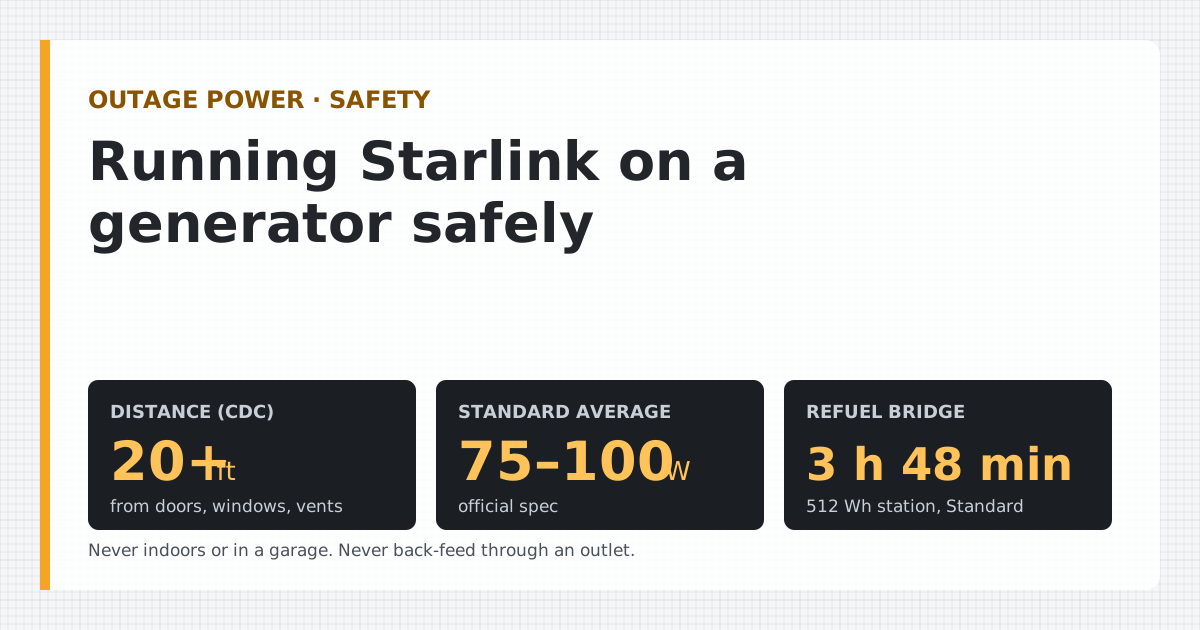
- CDC: never run a generator inside a home or garage, even with doors and windows open. Use it outside, more than 20 feet from doors, windows and vents.
- Carbon monoxide is colorless and odorless. CDC says more than 400 Americans die each year from unintentional CO poisoning not linked to fires. Put battery-powered CO alarms near sleeping areas.
- Never plug a generator into a house outlet (back-feeding). Powering house circuits needs a transfer switch or interlock installed by a licensed electrician.
- Starlink's draw is small: the Standard averages 75–100 W Official spec: From a Starlink specification sheet or help article. Checked Oct 5, 2026, the Mini 25–40 W Official spec: From a Starlink specification sheet or help article. Checked Oct 5, 2026. Run it through a power station or UPS so it rides through refueling without dropping.
- Use a heavy-duty, outdoor-rated extension cord, keep the generator dry, and let it cool before refueling.
You can run Starlink from a portable generator, and it’s an easy load: the Standard dish averages 75–100 W Official spec: From a Starlink specification sheet or help article. Checked Oct 5, 2026 including its router, the Mini 25–40 W Official spec: From a Starlink specification sheet or help article. Checked Oct 5, 2026. The dangers are the generator’s, not the dish’s. Run it outdoors, more than 20 feet from doors, windows and vents (CDC), never in a garage; never plug it into a house outlet; and use a heavy-duty outdoor cord. Put a power station or UPS between the generator and the dish so the internet stays up while you refuel.
Carbon monoxide: why distance matters
Generators produce carbon monoxide (CO), a gas you can’t see or smell. The CDC’s figure: more than 400 Americans die each year from unintentional CO poisoning not linked to fires, and its generator fact sheet says CO “kills without warning”.
The CDC’s generator guidance is blunt:
- “Never use a generator inside your home or garage, even if doors and windows are open.”
- “Only use generators outside, more than 20 feet away from your home, doors, and windows.” (The CDC’s main CO page adds vents.)
- Install battery-operated or battery back-up CO detectors near every sleeping area, and check them regularly.
Ready.gov gives the same 20-foot distance from windows, doors and attached garages, and adds: keep the generator dry and protected from rain or flooding, and use heavy-duty extension cords to connect appliances.
That distance is why you need a long cord, and why the cord matters.
Back-feeding: the danger you can’t see
“Back-feeding” means pushing generator power into your house wiring through an outlet, usually with a cord that has a plug on both ends. Don’t. It can send power back out onto the utility line, where line workers expect it to be dead, and it can overload your home’s wiring.
If you want the generator to power house circuits (including the outlet your Starlink normally uses), the safe route is a transfer switch or a panel interlock installed by a licensed electrician. It isolates your house from the grid while the generator runs.
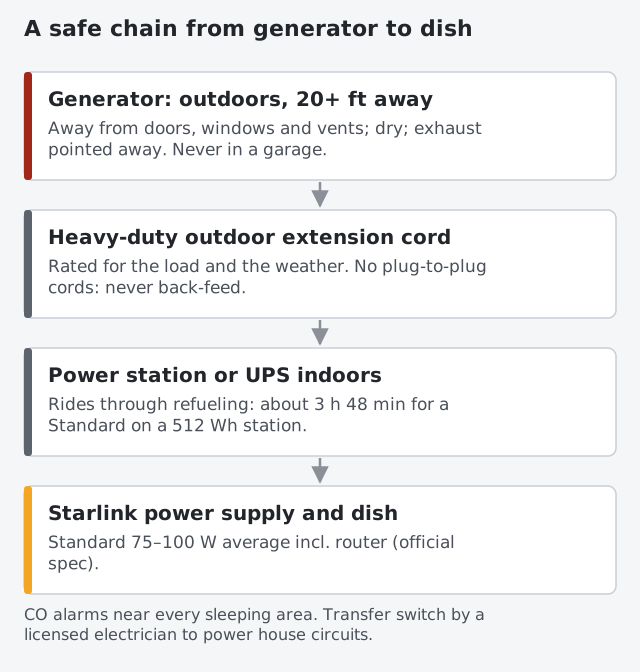
For Starlink alone you don’t need any of that. Run a cord from the generator to the Starlink power supply, or to a power station that the power supply plugs into.
Cords and placement
- Use a heavy-duty, outdoor-rated extension cord, rated for the load and long enough to keep the generator at a safe distance. Starlink is a small load; the cord is about weather and wear as much as current.
- Keep the generator dry. Ready.gov: protect it from rain or flooding. Don’t run it in standing water.
- Keep connections off the ground and out of puddles. The Starlink power supply is weather-rated (The Standard power supply is rated IP66 Type 4, operating -30°C to 60°C (-22 to 140°F).) but an extension cord joint usually isn’t.
- Point the exhaust away from the house and from where people gather.
- Refuel only when it’s off and cool. Spilled fuel on a hot engine is a fire risk.
Why put a battery between generator and dish
A generator stops when it runs out of fuel, when you refuel, when it’s overloaded by something else starting, or when you shut it down for the night. Every stop drops Starlink, and a restart takes minutes to reconnect.
A power station or a UPS between the generator and the Starlink power supply fixes that. While the generator runs, it powers the dish and recharges the battery; when it stops, the battery carries on.
How long the battery covers, at the top of each dish’s average range, with our planning assumptions (85% usable, 87% through the AC outlet for the Standard, 90% on 12 V for the Mini Planning assumption: Our stated assumption, used until bench results replace it):
| Battery | Standard (100 W) | Mini (40 W) |
|---|---|---|
| 256 Wh station | 1 h 54 min | 4 h 54 min |
| 512 Wh station | 3 h 48 min | 9 h 48 min |
| 1,024 Wh station | 7 h 36 min | 19 h 36 min |
Even the smallest class covers a refuel. A bigger one lets you shut the generator off overnight and sleep without the noise, which also means no generator running unattended near a sleeping house.
What size generator
Starlink barely registers. The Standard’s average of 75–100 W Official spec: From a Starlink specification sheet or help article. Checked Oct 5, 2026 and the Mini’s 25–40 W Official spec: From a Starlink specification sheet or help article. Checked Oct 5, 2026 include the router and power supply. Starlink doesn’t publish a startup figure for the Standard. Size the generator for everything else you plan to run: fridge, freezer, well pump, lights, heating controls. Starlink is a rounding error on that list.
An inverter generator is the better match for electronics because it’s designed to produce cleaner, steadier power. If you have a conventional generator, the power station or UPS between it and the dish adds a buffer.
A Mini as the outage dish
If your home dish is a Standard, a Mini is worth knowing about as an outage tool: well under half the Standard’s power on Starlink’s figures, and it runs from 12–48 V DC or USB-C, so a power station’s DC port can run it all night without any generator. Our multi-day outage plan does the math, and our Mini vs Standard comparison has the numbers. Note that the Mini needs its own Starlink service plan; check what yours allows.
Common mistakes
- Running the generator in the garage “with the door open”. The CDC says never, even with doors and windows open.
- A cord with plugs on both ends. That’s a back-feed waiting to happen.
- Indoor extension cords outdoors. They aren’t made for wet ground or sun.
- No CO alarm. They’re cheap; put them near where people sleep.
- No buffer. The dish drops every time the generator stops.
What to do next
Read our outage power guide for UPS and power station options, then plan the full outage with the multi-day outage guide. For your exact hours, use the calculator with the Standard and AC selected.
Questions people ask
Can I run Starlink off a generator?
Yes. Plug the Starlink power supply into the generator's outlet (ideally through a power station or UPS) using a heavy-duty outdoor extension cord, with the generator outdoors and well away from the house.
How far should a generator be from the house?
The CDC says to use generators outside, more than 20 feet away from any windows, doors and vents, and never inside a home or garage, even with the doors and windows open.
What size generator do I need for Starlink?
Starlink itself is small: the Standard averages 75–100 W including its router, the Mini 25–40 W. Any working portable generator can carry it; size the generator for everything else you'll run at the same time.
Is an inverter generator better for Starlink?
It's the safer choice for electronics because inverter generators are designed to produce cleaner power. Putting a power station or UPS between the generator and the dish also smooths out dips and covers refueling.
Can I plug my generator into a wall outlet to power the house?
No. That's back-feeding: it can energize the utility line and endanger line workers and neighbors, and it can damage your wiring. Use a transfer switch or interlock installed by a licensed electrician.
How long will Starlink run while I refuel the generator?
On a 512 Wh power station between the generator and the dish, about 3 h 48 min for a Standard at the top of its average range, or about 4 h 54 min for a Mini on a 256 Wh station on 12 V. Refueling takes minutes.
Sources
- Carbon Monoxide Poisoning: About (CDC) · retrieved
- When the Power Goes Out, Keep Your Generator Outside (CDC fact sheet, PDF) · retrieved
- Power Outages (Ready.gov) · retrieved
- How much power does my Starlink need? (Starlink Help Center) · retrieved
- Standard 4 X Specifications (PDF) · retrieved
- Starlink Mini Specifications (PDF) · retrieved
Starlink figures render from our watts table and fact file with the date we checked them. Runtime and solar math uses the planning assumptions on how we get our numbers until bench results replace them.
Independent · not affiliated with SpaceX or Starlink. We don’t sell Starlink. Links to Starlink’s plan pages here use the site owner’s own referral link (Starlink may give the owner a referral reward; your price is the same); nothing else in this article earns us anything. We haven’t used a Starlink Mini ourselves: Mini figures come from Starlink’s published specs or dated owner reports, labeled that way. General information, not electrical advice. How we make money · Report an error