Key takeaways
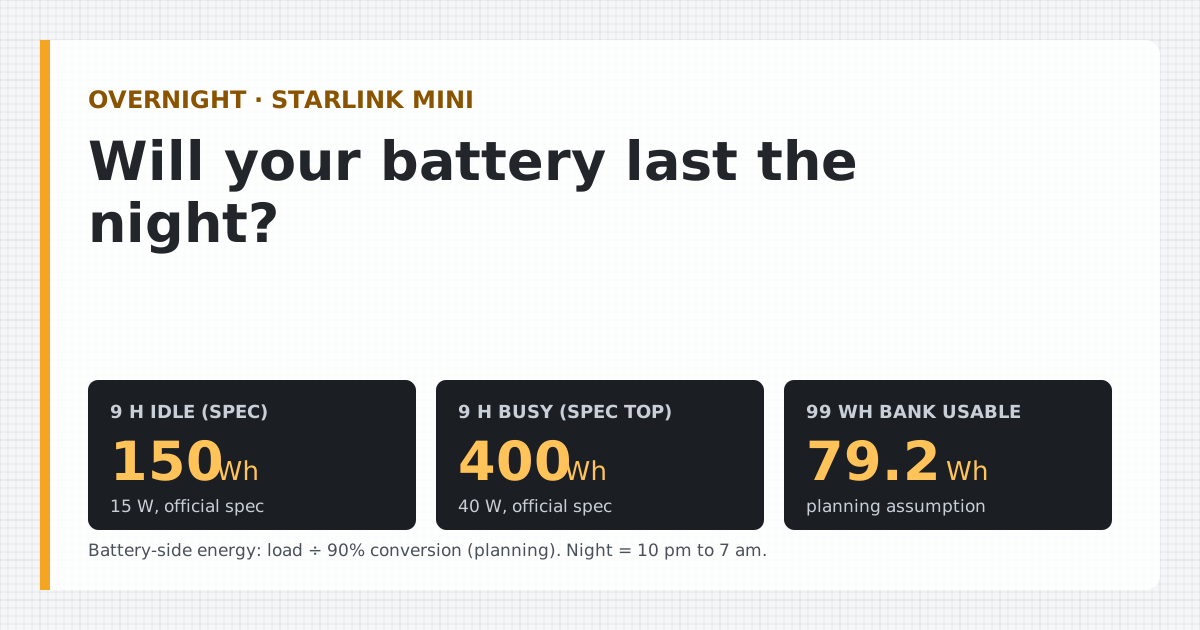
- A 9-hour night left on costs about 150 Wh at the battery if the Mini idles at Starlink's 15 W, and about 400 Wh if it works at the top of the average range (40 W).
- A 99 Wh power bank (79.2 Wh usable Planning assumption: Our stated assumption, used until bench results replace it) won't make it through the night. A 256 Wh station just covers an idle night; a 512 Wh station covers a busy one.
- One van owner logged 486 Wh/day left on 24/7 and estimated that switching off overnight saves about 150 Wh a day Community report: A dated measurement posted by an owner, cited.
- Starlink's sleep schedule saves power, but while asleep the Mini gives no internet, melts no snow and can't be managed remotely. Starlink doesn't publish its draw while asleep.
Left on through a 9-hour night, a Starlink Mini takes about 150 Wh from the battery if it idles, and about 400 Wh if it’s busy. That rules out a 99 Wh power bank and points to a 256 Wh power station for quiet nights or a 512 Wh station if someone streams late. A sleep schedule can cut the overnight cost sharply, at the price of having no internet while it sleeps.
Here’s how to size it for your night.
What a night costs
We’ll use a 9-hour night, 10 pm to 7 am. Change the hours to match yours; the method is the same.
| How the Mini spends the night | Watts | At the Mini | From the battery Planning assumption: Our stated assumption, used until bench results replace it |
|---|---|---|---|
| Idle, per Starlink | 15 W Official spec: From a Starlink specification sheet or help article. Checked Oct 5, 2026 | 135 Wh | 150 Wh |
| Idle, per one van owner’s 24/7 log | 18–20 W Community report: A dated measurement posted by an owner, cited. Checked Oct 5, 2026 | 162–180 Wh | (measured on the DC side) |
| Busy all night (top of the average range) | 40 W Official spec: From a Starlink specification sheet or help article. Checked Oct 5, 2026 | 360 Wh | 400 Wh |
“From the battery” adds the 90% conversion we plan with on a USB-C or 12 V port. The van owner’s log was measured on the DC side, so it already includes that loss.
Most nights are close to idle: phones sync, maybe a camera uploads, nobody streams. But “idle” isn’t zero, and it isn’t constant. Starlink says its figures vary with temperature, location and use. If there’s any chance of snow, the Mini also heats to melt it unless you turn that off (see below), and that’s the most power-hungry thing it does.
Which batteries make it to morning
Compare the overnight cost with each battery class’s usable energy (80% of label for banks, 85% for stations Planning assumption: Our stated assumption, used until bench results replace it):
| Battery (label) | Usable Wh | Idle night (150 Wh) | Busy night (400 Wh) |
|---|---|---|---|
| 99 Wh USB-C power bank | 79.2 | No | No |
| 256 Wh power station | 217.6 | Yes, little margin | No |
| 512 Wh power station | 435.2 | Yes | Yes, just |
| 1,024 Wh power station | 870.4 | Yes, plus most of the next day | Yes |
A 256 Wh station covering an idle night “with little margin” means a cold night, a firmware update or a phone that streams at 3 am could empty it before dawn. If the morning connection matters (a 7 am call, a weather check before a drive), step up a class.
And remember the night is only part of the day. If you also used the Mini all evening, the battery isn’t full when the night starts. Size for the whole day, as below.
Sizing a full day, on or off overnight
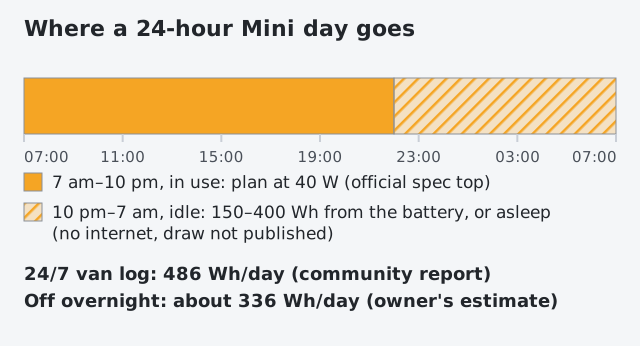
The best real-world number we have for a Mini left on around the clock comes from a van owner’s log: FarOutRide: about 486 Wh per day when left on 24/7; switching it off overnight would save about 150 Wh/day. Community report: A dated measurement posted by an owner, cited. Checked Oct 5, 2026 That’s an average of about 20.3 W over the day, measured on the DC side.
- Left on 24/7: 486 Wh ÷ 85% usable = about 572 Wh of label capacity. A 512 Wh station falls short; a 1,024 Wh class station covers it with room for a cloudy morning.
- Off overnight: 486 − 150 = 336 Wh, so about 395 Wh of label. A 512 Wh class station covers it.
Switching off overnight moves you down a whole battery class. That’s the single biggest saving available to most Mini owners, bigger than any choice between brands.
This is one owner’s day in one van. Your day could be higher if you work on video calls, or lower if you mostly check messages. Run your own pattern through the runtime calculator, which lets you set awake hours and pick a battery.
What the sleep schedule actually does
Starlink’s app has a Sleep Schedule (Settings > Starlink > Sleep Schedule). Starlink’s own description: The Starlink app's Sleep Schedule (Settings > Starlink > Sleep Schedule) can be used to save power; while asleep Starlink gives no internet, does not melt snow, and can't be managed remotely. Official spec: From a Starlink specification sheet or help article. Checked Oct 5, 2026
Three practical consequences:
- No internet while asleep. No overnight messages, no camera uploads, no remote check-in. If you rely on any of those, a sleep window is the wrong tool.
- No snow melt while asleep. If snow falls overnight, you may wake to a covered dish and need to clear it by hand before it connects. In snow country, either skip the sleep window or plan to brush it off.
- No remote management while asleep. You can’t wake it from far away. Starlink also notes the app uses UTC by default, so check the times you set.
What Starlink does not publish is how many watts the Mini draws while asleep. We won’t guess. If you plan to depend on it, measure it: put a USB-C or DC inline meter between the battery and the Mini, let it sleep for an hour, and read the Wh. Our setup guide covers placing a meter in the power path.
Snow melt: the overnight wildcard
Snow melt is the reason some batteries are flat at dawn in winter. Starlink lists three modes: Snow Melt has Off, Automatic (recommended) and Pre-heat modes; Pre-heat may increase power consumption and Off uses no extra power. Official spec: From a Starlink specification sheet or help article. Checked Oct 5, 2026
The Mini is rated to melt 1 in/hr Official spec: From a Starlink specification sheet or help article. Checked Oct 5, 2026 of snowfall. Starlink doesn’t publish the Mini’s draw while heating; its input rating (60 W Official spec: From a Starlink specification sheet or help article. Checked Oct 5, 2026) is the ceiling. For overnight sizing in snow:
- Clear sky forecast: set snow melt to Off for the night and save the reserve.
- Light snow expected and you need a morning connection: leave Automatic on and size the battery as if the Mini runs near 60 W for the hours of snowfall.
- Never use Pre-heat on a battery overnight unless you’ve measured what it costs.
Cold has a second effect: lithium batteries deliver less when cold and most shouldn’t be charged below freezing. If the battery sits outside, read charging LiFePO4 below freezing before winter.
Common mistakes
- Sizing for the night alone. The battery starts the night at whatever the evening left. Size for the 24-hour day, then check the night fits in what’s left.
- Trusting a station’s “hours remaining” display overnight. Displays estimate from the current draw, which jumps between idle and busy. Read the percentage at bedtime and in the morning instead, and do the math.
- Using the AC outlet. The inverter adds a loss and, on many stations, its own idle draw. Use a 12 V or 100 W USB-C PD port. See inverter vs DC.
- Eco or auto-off settings. Some stations turn off a port when the load drops low. A Mini at idle can look like “nothing plugged in”. Check your station’s settings and test before the first real night.
When this is the wrong plan
- You need it every night for weeks with no recharge. No battery class that you’d carry makes that practical; add solar. Our panel sizing guide starts with the same daily Wh you worked out here.
- You only need a morning weather check. Turn the Mini off entirely at night and power it up for ten minutes in the morning. The boot costs a few Wh (one owner logged 36–39 W Community report: A dated measurement posted by an owner, cited. Checked Oct 5, 2026 for the first few minutes), far less than a night of idling.
- You have reliable cell coverage where you sleep. A phone hotspot for overnight messages and the Mini off may be the cheapest option of all.
What to do next
- Decide whether you need the internet overnight. That answer picks your battery class more than anything else.
- If yes, size for a full day at 572 Wh of label (24/7) or 395 Wh (off overnight), then adjust for your own use in the calculator.
- Compare station types and ports in our power station guide.
Questions people ask
Can a Starlink Mini run all night on a power bank?
Not on a 99 Wh bank, the largest you can fly with without airline approval. It holds about 79.2 usable Wh by our planning figure, and an idle 9-hour night needs about 150 Wh at the battery.
How much battery does a Starlink Mini use overnight?
About 135–360 Wh at the Mini for a 9-hour night, depending on whether it idles (15 W) or works hard (40 W). Add the conversion loss and it's about 150–400 Wh from the battery.
Does the Starlink sleep schedule save battery?
Starlink says the sleep schedule "can be used to conserve power". It doesn't publish how many watts the Mini draws while asleep, so measure it with a USB-C or DC meter before you size a battery around it.
Should I turn off my Starlink Mini at night?
If nobody needs messages overnight and there's no snow to melt, yes: the overnight hours are a large share of a 24/7 day. If you need alerts, cameras or a remote check overnight, leave it on and size the battery for it.
What size power station runs a Starlink Mini 24 hours?
At one owner's logged 486 Wh/day, about 572 Wh of label capacity at our 85% usable planning figure, so a 1,024 Wh class station. Off overnight, about 395 Wh, so a 512 Wh class.
Sources
- How much power does my Starlink need? (Starlink Help Center) · retrieved
- Starlink Mini Specifications (PDF) · retrieved
- How do I set up sleep schedule? (Starlink Help Center) · retrieved
- How do I adjust snow melt mode? (Starlink Help Center) · retrieved
- Starlink Mini Install: Power, Wiring, & Mounting to our Van (FarOutRide) · retrieved
Starlink figures render from our watts table and fact file with the date we checked them. Runtime and solar math uses the planning assumptions on how we get our numbers until bench results replace them.
Independent · not affiliated with SpaceX or Starlink. We don’t sell Starlink. Links to Starlink’s plan pages here use the site owner’s own referral link (Starlink may give the owner a referral reward; your price is the same); nothing else in this article earns us anything. We haven’t used a Starlink Mini ourselves: Mini figures come from Starlink’s published specs or dated owner reports, labeled that way. General information, not electrical advice. How we make money · Report an error