Key takeaways
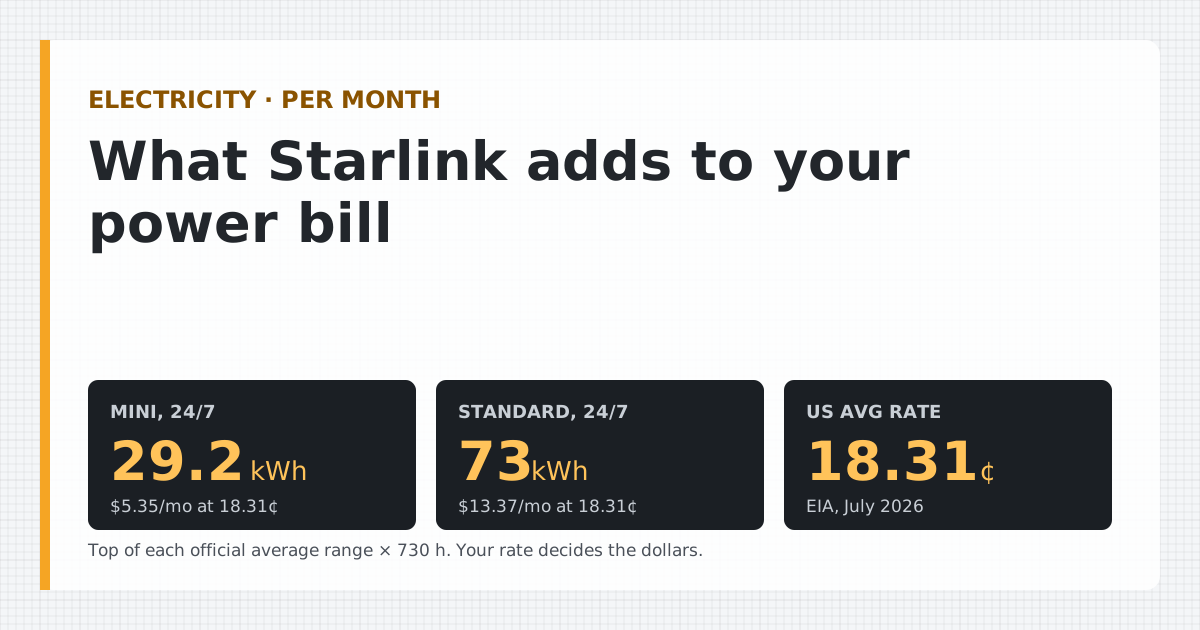
- kWh per month = average watts × 730 hours ÷ 1,000. Starlink's averages give a Mini left on 24/7 about 18.3–29.2 kWh and a Standard 54.8–73 kWh.
- At the US average residential price of 18.3¢ per kWh (EIA, July 2026), that's about $3.34–$5.35 a month for the Mini and $10.02–$13.37 for the Standard.
- A full year at the top of each range: about $64 for the Mini and $160 for the Standard at that rate.
- Your rate decides the dollars. Multiply the kWh by the price per kWh on your own bill, including delivery charges.
Left on 24/7, a Starlink Mini uses about 18.3–29.2 kWh a month and a Standard about 54.8–73 kWh, from Starlink’s published averages. At the US average residential price of 18.3¢ per kWh (EIA, July 2026), that’s roughly $3.34–$5.35 a month for the Mini and $10.02–$13.37 for the Standard. On grid power, Starlink is a small appliance. On batteries, the same numbers matter far more.
The arithmetic
kWh per month = average watts × 730 ÷ 1,000 cost per month = kWh × your price per kWh
730 is the average number of hours in a month (8,760 hours in a year ÷ 12). A kilowatt-hour (kWh), the unit on your bill, is 1,000 watt-hours.
For the watts, use Starlink’s published averages, which include the router, power supply and cables, measured at the wall (AC input):
- Mini: 25–40 W Official spec: From a Starlink specification sheet or help article. Checked Oct 5, 2026 average, 15 W Official spec: From a Starlink specification sheet or help article. Checked Oct 5, 2026 idle.
- Standard (4 / 4 X): 75–100 W Official spec: From a Starlink specification sheet or help article. Checked Oct 5, 2026 average, 20 W Official spec: From a Starlink specification sheet or help article. Checked Oct 5, 2026 idle.
- Standard Actuated: 50–75 W Official spec: From a Starlink specification sheet or help article. Checked Oct 5, 2026 average.
Per month, by dish
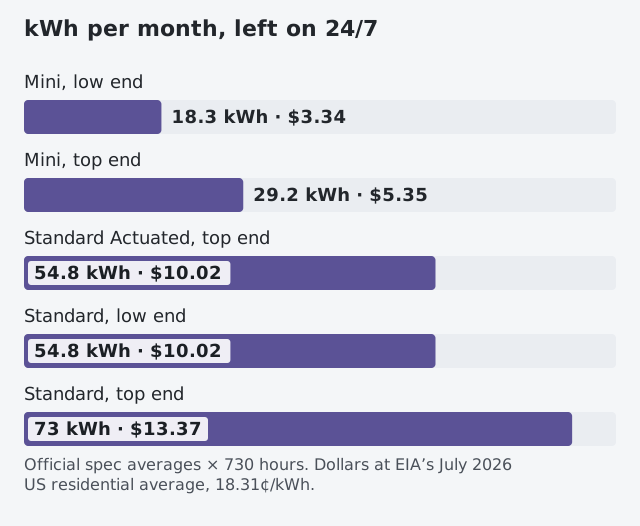
| Dish, left on 24/7 | kWh per month | At 18.3¢/kWh |
|---|---|---|
| Mini, low end (25 W) | 18.3 | $3.34 |
| Mini, top end (40 W) | 29.2 | $5.35 |
| Mini, one owner’s 24/7 day average (20.3 W) | 14.8 | $2.71 |
| Standard Actuated (50–75 W) | 36.5–54.8 | $6.68–$10.02 |
| Standard, low end (75 W) | 54.8 | $10.02 |
| Standard, top end (100 W) | 73 | $13.37 |
The owner figure comes from a van log measured on 12 V DC (FarOutRide: about 486 Wh per day when left on 24/7; switching it off overnight would save about 150 Wh/day. Community report: A dated measurement posted by an owner, cited. Checked Oct 5, 2026), so it skips the AC power supply’s loss; on a wall outlet it would be a little higher. It’s there to show that real 24/7 days often land below the spec’s top.
Over a year
At the top of each range and 18.3¢/kWh: about $64 a year for the Mini and $160 for the Standard. For comparison with your other devices, look at the wattage on their labels and run the same formula.
Per day and per hour
Monthly figures hide how small each hour is. At the same 18.3¢/kWh average:
| Dish, at Starlink’s average | Wh per day (24 h) | Cents per day | Cents per hour at the top of the range |
|---|---|---|---|
| Mini | 600–960 | 11–17.6¢ | 0.7¢ |
| Standard | 1,800–2,400 | 33–43.9¢ | 1.8¢ |
So switching a Mini off for a night on grid power saves about a cent or two. That’s why the on-or-off-overnight decision only really matters on batteries and solar, where the same watt-hours set the size of the gear you buy. The overnight guide covers that case.
Idle is not zero
Starlink’s idle figures, 15 W Official spec: From a Starlink specification sheet or help article. Checked Oct 5, 2026 for the Mini and 20 W Official spec: From a Starlink specification sheet or help article. Checked Oct 5, 2026 for the Standard, are what a connected dish draws with almost no traffic. Over a month that’s still about 11 kWh for an idle Mini and 14.6 kWh for an idle Standard. A dish left on at a cabin you rarely visit keeps using that, every hour. If you want it truly off, unplug it or use the app’s sleep schedule; Starlink doesn’t publish the draw while asleep.
The rate is the variable
The US average hides a wide spread. EIA’s table 5.6.A lists every state, and some pay well over the average while others pay much less. Your own bill is the best source: divide the total charged (energy plus delivery, before fixed monthly fees) by the kWh used to get your effective rate, then:
Mini top end: 29.2 kWh × your rate Standard top end: 73 kWh × your rate
Time-of-use plans charge more at certain hours; Starlink runs around the clock, so use your plan’s blended rate.
What changes the number
- Hours on. A Mini used 10 hours a day at the top of its range uses about 12.2 kWh a month ($2.23 at the average rate). Turned off at night, the Standard saves proportionally more.
- Snow melt. Heating raises draw on snowy days. Snow Melt has Off, Automatic (recommended) and Pre-heat modes; Pre-heat may increase power consumption and Off uses no extra power.
- Heavy use. Streaming and video calls sit near the top of the range; light browsing near the bottom. See does streaming drain it faster.
- Sleep schedule. The Starlink app's Sleep Schedule (Settings > Starlink > Sleep Schedule) can be used to save power; while asleep Starlink gives no internet, does not melt snow, and can't be managed remotely.
Where these numbers really matter: off the grid
On the grid, the difference between the Mini and Standard is a few dollars a month. On a battery or solar, the same kWh decide how big a battery and panel you need. A day of Standard use (1,800–2,400 Wh) is a large power station’s whole capacity; a day of Mini use (600–960 Wh) fits in a mid-size one. That’s why our Mini vs Standard power comparison focuses on battery hours, and why the calculator starts from watts, not dollars.
Measuring your own
If you want your real figure, a plug-in power meter between the outlet and the Starlink power supply shows watts and accumulates kWh. Leave it a full week to average out busy and quiet days, then divide by 7 and multiply by 30.4. Our methods page explains how we’ll use the same kind of meter on the owner’s home Standard dish.
What to do next
Every watt figure here, with its source and date, is on the watts table. For battery and solar sizing, use the calculator.
Questions people ask
Does Starlink use a lot of electricity?
No, by household standards. A Mini left on 24/7 uses about 18.3–29.2 kWh a month and a Standard 54.8–73 kWh, on Starlink's average figures. That's a few dollars a month at the US average rate.
How much does it cost to run Starlink per month?
At EIA's July 2026 US residential average of 18.3 cents per kWh: about $3.34–$5.35 for a Mini and $10.02–$13.37 for a Standard, left on 24/7. Your local rate may be higher or lower.
How many kWh does Starlink use per day?
About 600–960 Wh for the Mini and 1,800–2,400 Wh for the Standard, left on 24 hours at Starlink's averages.
Should I turn off Starlink at night to save electricity?
On grid power the saving is small: cents a night. Turn it off at night if you're on batteries or solar, where the overnight hours decide your battery size. Starlink's sleep schedule can do it automatically.
Does Starlink use more electricity in winter?
It can, when snow melt is heating the dish. Starlink doesn't publish the heating draw. Set snow melt to Automatic rather than Pre-heat if you want to limit it.
Does the router add to Starlink’s electricity use?
Starlink's published figures already include the router, power supply and cables, so don't add a separate router figure.
Sources
- Starlink Mini Specifications (PDF) · retrieved
- Standard 4 X Specifications (PDF) · retrieved
- How much power does my Starlink need? (Starlink Help Center) · retrieved
- EIA Electric Power Monthly, Table 5.6.A: Average Price of Electricity to Ultimate Customers by End-Use Sector, by State (July 2026 and 2025) · retrieved
- Starlink Mini Install: Power, Wiring, & Mounting to our Van (FarOutRide) · retrieved
- How do I adjust snow melt mode? (Starlink Help Center) · retrieved
Starlink figures render from our watts table and fact file with the date we checked them. Runtime and solar math uses the planning assumptions on how we get our numbers until bench results replace them.
Independent · not affiliated with SpaceX or Starlink. We don’t sell Starlink. Links to Starlink’s plan pages here use the site owner’s own referral link (Starlink may give the owner a referral reward; your price is the same); nothing else in this article earns us anything. We haven’t used a Starlink Mini ourselves: Mini figures come from Starlink’s published specs or dated owner reports, labeled that way. General information, not electrical advice. How we make money · Report an error