Key takeaways
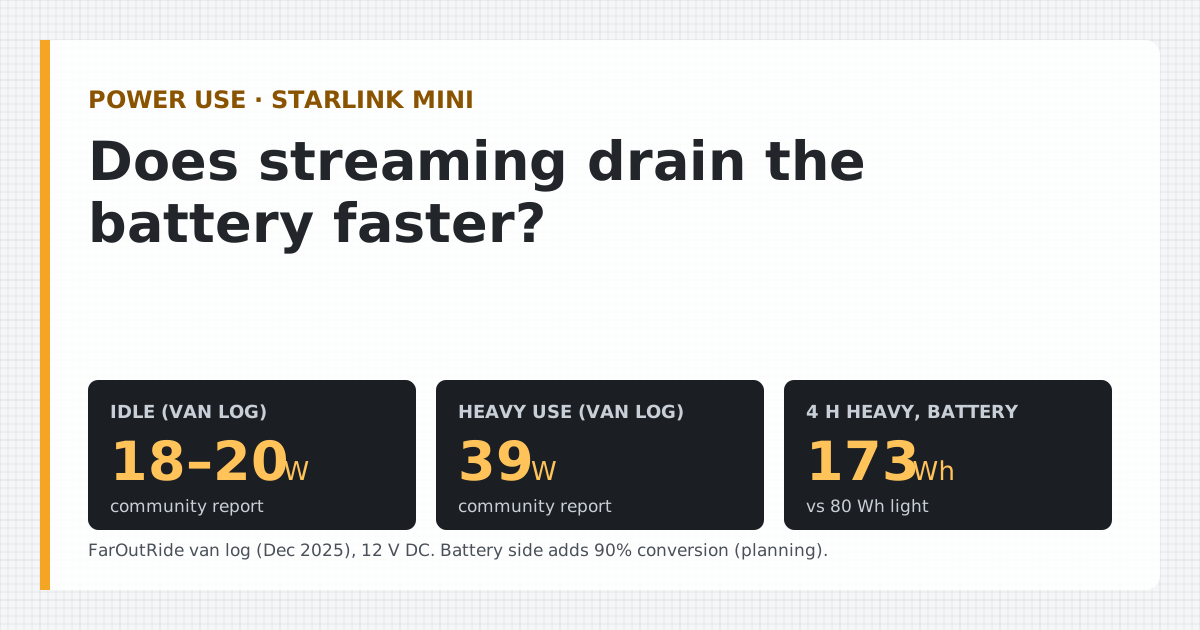
- Yes, streaming costs more. One van owner logged 18–20 W Community report: A dated measurement posted by an owner, cited. Checked Oct 5, 2026 idle and 39 W Community report: A dated measurement posted by an owner, cited. Checked Oct 5, 2026 in heavy evening use, a gap of about 21 W.
- Another owner's USB-C meter swung between 11–38 W Community report: A dated measurement posted by an owner, cited. Checked Oct 5, 2026 after boot and averaged 20 W Community report: A dated measurement posted by an owner, cited. Checked Oct 5, 2026 over 3 hours of mixed browsing and streaming.
- Over a 4-hour evening that's about 80 Wh from the battery if it's quiet and 173 Wh if it's busy.
- On a 99 Wh bank, light use lasts about 4 h; heavy use about 1 h 48 min. Plan streaming nights at the top of Starlink's average range, 40 W.
Yes. In the owner logs we can cite, a Starlink Mini sits around 18–20 W Community report: A dated measurement posted by an owner, cited. Checked Oct 5, 2026 when idle and climbs to about 39 W Community report: A dated measurement posted by an owner, cited. Checked Oct 5, 2026 during heavy evening use, roughly double. Over a 4-hour evening that’s the difference between about 80 Wh and 173 Wh from your battery. If you stream, plan with the top of Starlink’s average range, 40 W Official spec: From a Starlink specification sheet or help article. Checked Oct 5, 2026, not the idle figure.
What the measurements show
Starlink publishes ranges, not a breakdown by activity:
- Average: 25–40 W Official spec: From a Starlink specification sheet or help article. Checked Oct 5, 2026 on the spec sheet (20–40 W Official spec: From a Starlink specification sheet or help article. Checked Oct 5, 2026 in the help center).
- Idle: 15 W Official spec: From a Starlink specification sheet or help article. Checked Oct 5, 2026.
- Input rating: 60 W Official spec: From a Starlink specification sheet or help article. Checked Oct 5, 2026, the most it’s rated to take.
Starlink notes its figures include the power supply and cables and are AC-input averages that vary with temperature, location and use. To see how use changes the draw, we need owners who logged it. These are the ones we found with a date and a method:
| Owner report | Light / idle | Heavy | How measured |
|---|---|---|---|
| FarOutRide van log (Dec 2025) | 18–20 W Community report: A dated measurement posted by an owner, cited. Checked Oct 5, 2026 | 39 W Community report: A dated measurement posted by an owner, cited. Checked Oct 5, 2026 | 12 V DC system, battery monitor |
| Escape Trailer forum (Feb 2025) | low 11 W | high 38 W | USB-C inline meter |
| Expedition Portal (Sep 2024) | 20 W | 50 W | not stated |
| DIY Solar forum (2024) | 19 W Community report: A dated measurement posted by an owner, cited. Checked Oct 5, 2026 mostly idle | (a few speed tests) | stock power supply, meter not stated |
The pattern is consistent: quiet use in the teens or low 20s of watts, heavy use in the high 30s, short peaks higher. The Expedition Portal figure of 50 W is above Starlink’s 40 W average ceiling; the owner didn’t say how it was measured, so treat it as an occasional peak, not a planning figure.
What it does to your battery
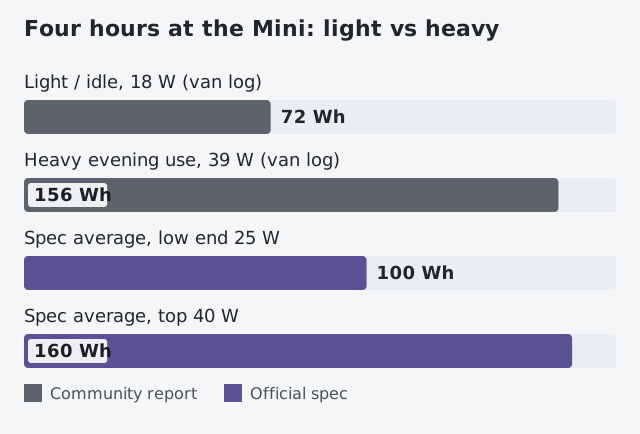
Take a 4-hour evening and run the arithmetic. At the Mini:
- Light use at 18 W: 4 × that = 72 Wh.
- Heavy use at 39 W: 4 × that = 156 Wh.
From the battery, add the 90% conversion on a USB-C or 12 V port Planning assumption: Our stated assumption, used until bench results replace it: 80 Wh versus 173 Wh.
On a 99 Wh USB-C power bank (79.2 usable Wh by our planning figure):
- Light use: about 4 h.
- Heavy use: about 1 h 48 min.
So a bank that comfortably covers an afternoon of messages and maps won’t get through a two-hour movie plus a video call. That’s the most common surprise we see in owner threads, and it’s why our battery guide sizes at the top of the range.
The longer average: what a mixed evening really costs
Short peaks don’t drain a battery; sustained load does. The Escape forum owner’s meter logged 64 Wh over 3 h 6 min of browsing and streaming, an average of 20 W Community report: A dated measurement posted by an owner, cited. Checked Oct 5, 2026, even though the reading swung between 11–38 W along the way. The van owner’s whole day, left on 24/7, averaged 20.3 W Community report: A dated measurement posted by an owner, cited. Checked Oct 5, 2026.
Two lessons:
- Averages over hours are lower than the peaks you’ll see on a meter. Don’t size a battery from a single reading taken during a speed test.
- But a household that streams for hours will sit near the high figure the whole time. Size those evenings at 40 W Official spec: From a Starlink specification sheet or help article. Checked Oct 5, 2026.
What we don’t know
- Per-service figures. Nobody we can cite has compared Netflix, YouTube and a video call on the same Mini with a meter. We won’t invent one.
- Resolution. Whether 4K versus 720p measurably changes the Mini’s draw hasn’t been tested in anything we found. It changes how much data moves, and the logs suggest draw follows workload, but there’s no number to give.
- Number of devices. Same gap. What matters in the logs is total traffic, not device count.
- Upload. One RV forum post claims about 75 W on heavy uploads. That conflicts with Starlink’s 60 W input rating and we couldn’t verify the method, so it’s listed as unverified on our watts table and not used here.
If you measure your own Mini with a USB-C or DC inline meter (watts and watt-hours over an evening), you’ll know more about your setup than any of these reports.
Other things that raise the draw
Streaming isn’t the only load. In the owner logs and Starlink’s documents:
- Boot. One owner measured 36–39 W Community report: A dated measurement posted by an owner, cited. Checked Oct 5, 2026 for the first 3–5 minutes. See startup draw.
- Snow melt. Snow Melt has Off, Automatic (recommended) and Pre-heat modes; Pre-heat may increase power consumption and Off uses no extra power. Official spec: From a Starlink specification sheet or help article. Checked Oct 5, 2026
- Heat. When the Mini or its power supply runs hot, Starlink may throttle it; the thermal shutdown guide explains the alerts.
- Searching. A partly blocked view keeps it working harder to hold a connection. Placement with open sky helps power as well as speed.
How to plan a streaming night
- Size at 40 W. If you get less, it’s a bonus.
- Add the other devices. A laptop or TV running from the same battery often draws more than the Mini.
- Use a DC port. USB-C PD (100 W) or 12 V; skip the AC outlet’s inverter loss. See inverter vs DC.
- Turn the Mini off when the movie ends, unless you need it overnight; then read the overnight guide.
- Check yourself once. An inline meter for one evening replaces all the guesswork on this page.
What to do next
Run your evening through the runtime calculator at both the community and spec figures, and see whether your battery covers the worst case. The full list of readings, with dates and links, is on the watts table.
Questions people ask
Does Starlink use more power when streaming?
Yes. Owner measurements of the Mini show draw rising from the high teens of watts at idle to the high 30s in heavy use. Starlink's own spec gives an average range of 25–40 W and an idle figure of 15 W.
How many watts does a Starlink Mini use while streaming Netflix?
Nobody has published a per-service measurement we can cite. The closest is a van owner's log: about 39 W during heavy evening use. Plan with the top of Starlink's average range, 40 W.
Does video quality change the Mini’s power draw?
We haven't found a controlled test. The owner logs suggest the Mini's draw follows how hard it's working, so lowering resolution plausibly helps a little, but we can't put a number on it.
Does the number of connected devices affect power use?
Not measured anywhere we can cite. What the logs show is that total traffic matters: many devices idling cost little; one device streaming costs more.
Why is my Starlink Mini using 50 W?
Short peaks above the average are normal at boot, while heating to melt snow, and in heavy use. One Expedition Portal owner reports 20–50 W depending on use. Starlink rates the Mini's input at 60 W.
Sources
- Starlink Mini Specifications (PDF) · retrieved
- How much power does my Starlink need? (Starlink Help Center) · retrieved
- Starlink Mini Install: Power, Wiring, & Mounting to our Van (FarOutRide) · retrieved
- StarLink Mini measured power consumption (Escape Trailer Owners forum) · retrieved
- Starlink Mini Power Setup Questions (Expedition Portal forum) · retrieved
- Starlink Mini DC power consumption (DIY Solar Power Forum) · retrieved
Starlink figures render from our watts table and fact file with the date we checked them. Runtime and solar math uses the planning assumptions on how we get our numbers until bench results replace them.
Independent · not affiliated with SpaceX or Starlink. We don’t sell Starlink. Links to Starlink’s plan pages here use the site owner’s own referral link (Starlink may give the owner a referral reward; your price is the same); nothing else in this article earns us anything. We haven’t used a Starlink Mini ourselves: Mini figures come from Starlink’s published specs or dated owner reports, labeled that way. General information, not electrical advice. How we make money · Report an error