Key takeaways
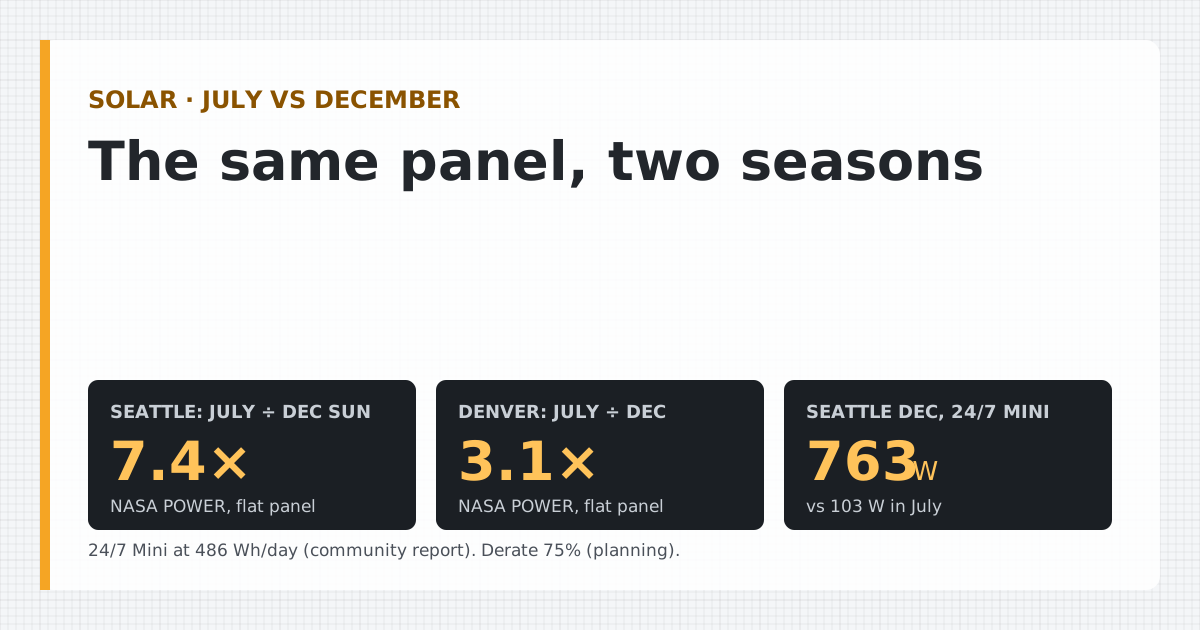
- On a flat panel, July delivers about 1.8× December's sun in Orlando, 2.4× in Phoenix, 3.1× in Denver and 7.4× in Seattle (NASA POWER, 2001–2020).
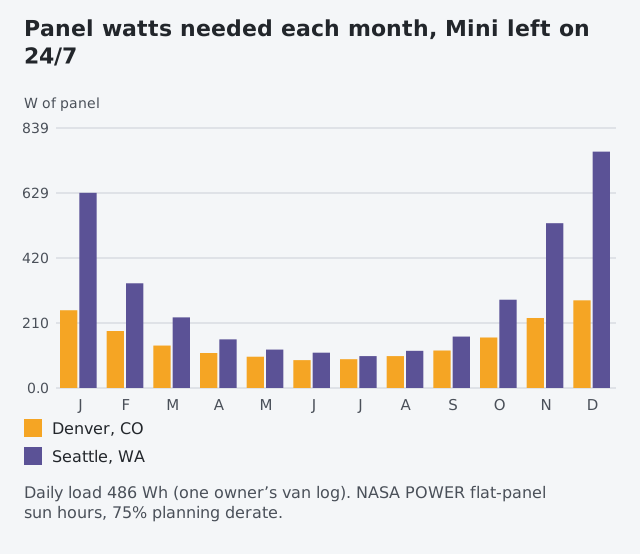
- A Mini left on 24/7 (one owner's 486 Wh/day) needs about 103 W of panel in a Seattle July and 763 W in December.
- Sized for July, that Seattle panel makes about 66 Wh a day in December: roughly 13% of what the Mini uses.
- In Anchorage, December's flat-panel sun (0.1 peak sun hours) makes solar alone impractical for 24/7 use. Shorter hours, a generator or grid charging have to fill in.
- Winter fixes, cheapest first: fewer hours on, sleep overnight, tilt the panel, add panel, add battery, add a backup charge source.
The same solar setup produces a fraction as much in December as in July: on a flat panel, NASA’s 20-year averages give July about 1.8× December’s sun in Orlando, 3.1× in Denver and 7.4× in Seattle. So a Starlink Mini left on 24/7 that needs about 103 W of panel in a Seattle July needs about 763 W in December. If you size in summer and use it year-round, plan the winter fix now.
Same Mini, two seasons
We’ll use one real 24/7 day: a van owner logged FarOutRide: about 486 Wh per day when left on 24/7; switching it off overnight would save about 150 Wh/day. Community report: A dated measurement posted by an owner, cited. Checked Oct 5, 2026. Then apply the three-number method: daily Wh ÷ (peak sun hours × 0.75), where 75% is our planning allowance for real-world losses Planning assumption: Our stated assumption, used until bench results replace it.
| City (NASA POWER reference) | July sun h | Dec sun h | Panel, July | Panel, December | July ÷ Dec |
|---|---|---|---|---|---|
| Orlando, FL | 5.7 | 3.1 | 114 W | 208 W | 1.8× |
| Phoenix, AZ | 7.5 | 3.1 | 87 W | 211 W | 2.4× |
| Denver, CO | 7 | 2.3 | 93 W | 283 W | 3.1× |
| Portland, ME | — | 1.4 | — | 473 W | — |
| Seattle, WA | 6.3 | 0.9 | 103 W | 763 W | 7.4× |
| Anchorage, AK | 4.8 | 0.1 | 137 W | 4,629 W | about 34× |
Sun hours are kWh per square meter per day on a flat surface, which equals peak sun hours. They’re 20-year averages for one city per state; your valley, ridge or tree line will differ. All 50 states are on solar sizing by state.
What a summer-sized panel does in December
Say you bought a 103 W panel in Seattle because the July math said so. In December it gets 0.9 peak sun hours instead of 6.3:
103 W × 0.9 h × 0.75 ≈ 66 Wh a day, against a Mini that uses 486 Wh. The battery covers the gap for a day or two, then it’s empty.
That’s the experience behind a lot of forum posts: “it worked all summer, and in November the battery kept dying”. Nothing broke. The sun moved.
Why the gap is so large
- Shorter days. Fewer hours of daylight.
- Lower sun. Winter sunlight crosses more atmosphere and hits a flat panel at a shallow angle, so each hour delivers less.
- More cloud. In many northern and coastal places, winter is also the cloudy season.
- Snow. A snow-covered panel produces almost nothing until it’s cleared.
The flat-panel numbers include the first three on average. Snow and a bad week are on top.
Winter adds load, too
Winter doesn’t only cut supply; it can raise demand:
- Snow melt. Snow Melt has Off, Automatic (recommended) and Pre-heat modes; Pre-heat may increase power consumption and Off uses no extra power. Official spec: From a Starlink specification sheet or help article. Checked Oct 5, 2026 The Mini is rated to melt 1 in/hr Official spec: From a Starlink specification sheet or help article. Checked Oct 5, 2026 of snowfall. Starlink doesn’t publish the Mini’s heating draw; plan snowy hours near its 60 W Official spec: From a Starlink specification sheet or help article. Checked Oct 5, 2026 input rating.
- Cold batteries. Lithium batteries deliver less when cold and most mustn’t be charged below freezing. Morning sun can go to waste while the battery warms. See charging LiFePO4 below freezing.
- Longer evenings indoors mean more hours online.
Closing the gap, cheapest first
- Cut the hours. Off overnight saves about 150 Wh a day by the van owner’s estimate (486 → 336 Wh). Starlink’s sleep schedule can automate it, but while asleep it gives no internet and melts no snow. See the overnight guide.
- Tilt the panel toward the sun. Our figures are for flat panels; a winter tilt captures more of the low sun. Free, if your mount allows it.
- Clear snow off panels each morning.
- Add panel. Often the simplest fix where you have the space, as long as the battery or station’s solar input can take it (check its watt and voltage limits).
- Add battery to ride out cloudy spells, not to replace missing sun. A bigger battery without more panel only delays the empty day.
- Add another charge source for the dark weeks: grid charging when you’re near power, or a generator. Our outage guide covers mixing them.
How long the battery carries you on a dark day
In winter the battery isn’t just the night bank; it’s the buffer for days when the panel barely produces. Planners call that “days of autonomy”: usable battery energy ÷ daily load. At the van owner’s 486 Wh a day, using our usable-share planning figures Planning assumption: Our stated assumption, used until bench results replace it:
| Battery (label) | Left on 24/7 | Off overnight (336 Wh/day) |
|---|---|---|
| 512 Wh station | 0.9 days | — |
| 1,024 Wh station | 1.8 days | 2.6 days |
| 12 V 100 Ah LiFePO4 | 2.4 days | — |
That’s measured from full. In December the battery often isn’t full at dusk, because the short day didn’t refill it. A battery sized for two days of autonomy in a sunny place may give you one in practice in the cloudy north, which is why adding panel usually comes before adding battery in the list above.
And cold shrinks it further: Battle Born says a 100 Ah LiFePO4 battery delivers about 70 Ah Standard: From a regulator, standards body or reference table. Checked Oct 5, 2026 at 0 °F, recoverable when warm. Keep the battery inside the warm space if you can.
When solar alone is the wrong plan
For a 24/7 Mini in a Anchorage December, our method calls for about 4,629 W of panel, which isn’t a portable setup by any definition. Our calculator flags anything over 2,000 W of panel for one dish as impractical. In the far north in winter, the realistic plan is fewer hours, a bigger battery charged from a generator or the grid, and solar as a supplement. In the cloudy Northwest and Northeast the numbers are large but workable if you have roof or ground space and cut overnight hours.
What to do next
Look up your own state on solar sizing by state, then put your hours into the calculator: it shows the panel watts for every month and the December versus July ratio for your state. Our winter off-grid guide covers snow melt and battery care in more depth.
Questions people ask
Does Starlink solar work in winter?
Yes, but it needs far more panel than summer for the same use. In a Denver December a Mini left on 24/7 needs about 283 W of panel versus 93 W in July, by our method. In the far north, solar alone may not keep up.
How much more solar do I need in winter?
Divide your July sun hours by December's. On a flat panel that's about 1.8× in Orlando, 3.1× in Denver and 7.4× in Seattle, per NASA POWER's 20-year averages. The panel needed scales by the same factor.
Why does my solar setup work in summer but not in winter?
Shorter days, a lower sun angle and more cloud cut daily energy, often to a third or less of summer's. Cold batteries also can't accept charge below their maker's limit, and snow can cover panels.
Does snow melt on the Starlink Mini use more battery in winter?
It can. Starlink's snow melt heats the dish when it detects snow; Starlink doesn't publish the Mini's heating draw. Its input rating, 60 W, is the ceiling to plan around for snowy hours.
Should I tilt solar panels in winter?
Yes. Our sun-hour figures are for a flat panel. Tilting toward the low winter sun raises output; NASA POWER also offers tilted-surface data if you want to model it.
Sources
- NASA POWER Climatology API (ALLSKY_SFC_SW_DWN, 2001–2020) · retrieved
- Average Solar Radiation - Peak Sun Hours (PVEducation) · retrieved
- Starlink Mini Install: Power, Wiring, & Mounting to our Van (FarOutRide) · retrieved
- How do I adjust snow melt mode? (Starlink Help Center) · retrieved
- How do I set up sleep schedule? (Starlink Help Center) · retrieved
- How to Winterize and Store LiFePO4 Batteries (Battle Born FAQ) · retrieved
- Starlink Mini Specifications (PDF) · retrieved
Starlink figures render from our watts table and fact file with the date we checked them. Runtime and solar math uses the planning assumptions on how we get our numbers until bench results replace them.
Independent · not affiliated with SpaceX or Starlink. We don’t sell Starlink. Links to Starlink’s plan pages here use the site owner’s own referral link (Starlink may give the owner a referral reward; your price is the same); nothing else in this article earns us anything. We haven’t used a Starlink Mini ourselves: Mini figures come from Starlink’s published specs or dated owner reports, labeled that way. General information, not electrical advice. How we make money · Report an error